HE LOST BOTH LEGS: POSSIBLE ABORIGINAL SOLDIER OF WORLD WAR ONE

Casualties for the AIF were devastating for the mainly young men who left Australia sound in body. A widely reported statement of the number and types of casualties incurred by the AIF during WW1 gives sobering statistics.

A.I.F. CASUALTIES.,

MELBOURNE, Friday.—Of 72,750 members of the Australian Imperial Force who had returned to Australia to the end of December 30,675 were discharged as the result of wounds and injuries, 32,772 as the result of sickness, and 9303 for miscellaneous reasons. Injuries to the eyes accounted for the discharge of 34 officers and 2768 men. Of these two officers, and 29 men became totally blind, 18 officers and 920 men lost the sight of one eye, or their sight suffered as the result of gunshot wounds. 20 men lost both legs, 554 the left leg, and 531 the right leg, two men lost both feet, 79 lost one foot, and 16 officers and 584 men lost an arm. Northern Star (Lismore, NSW) 15 March 1919 p.5.

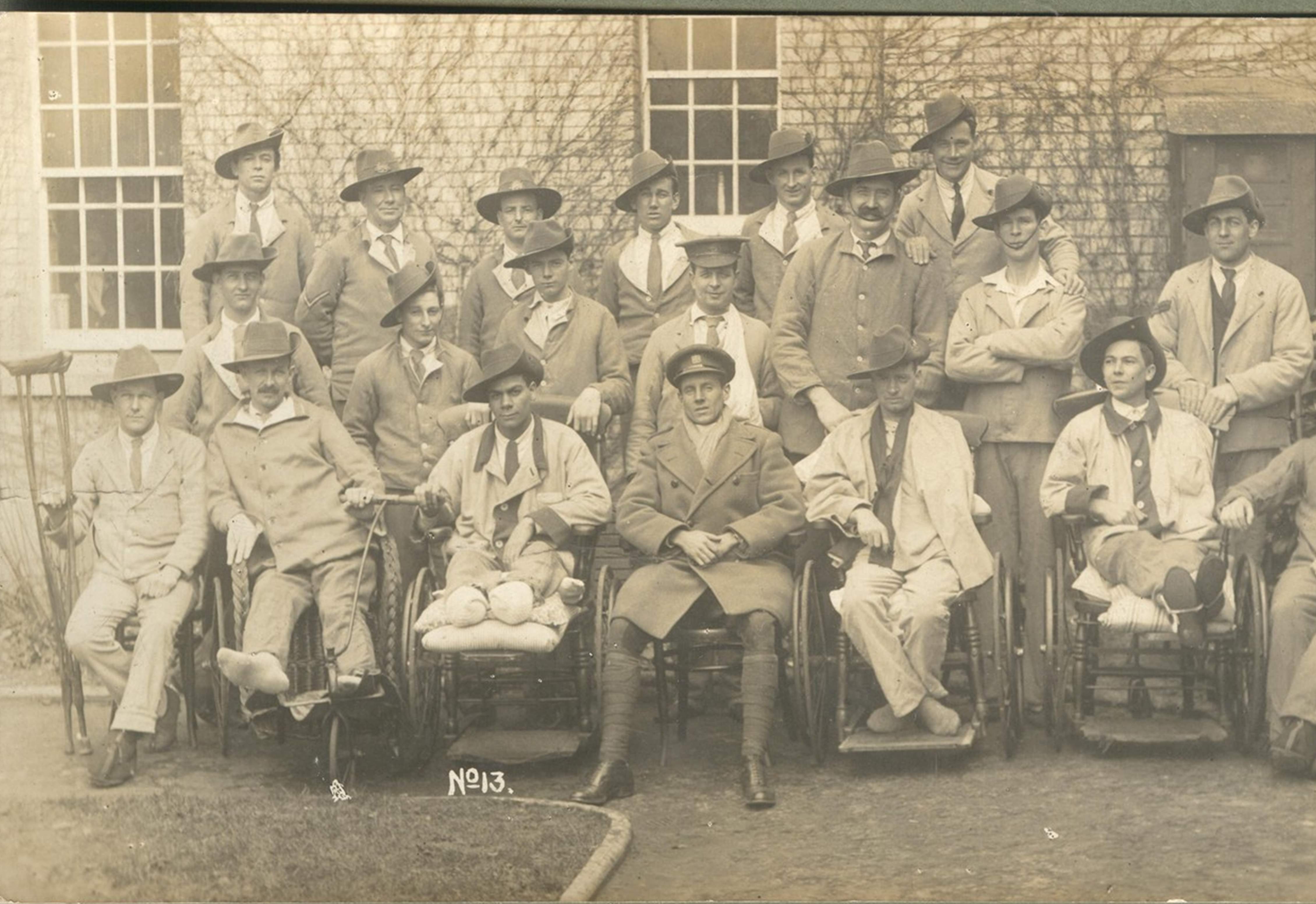
Just some of this number are shown in a photograph taken in England on 4 April 1917. The subject is a group of Australians with various injuries from G Ward, Horton War Hospital, Epsom, County of London. Horton, previously a mental asylum, became a military hospital for the period of the war.

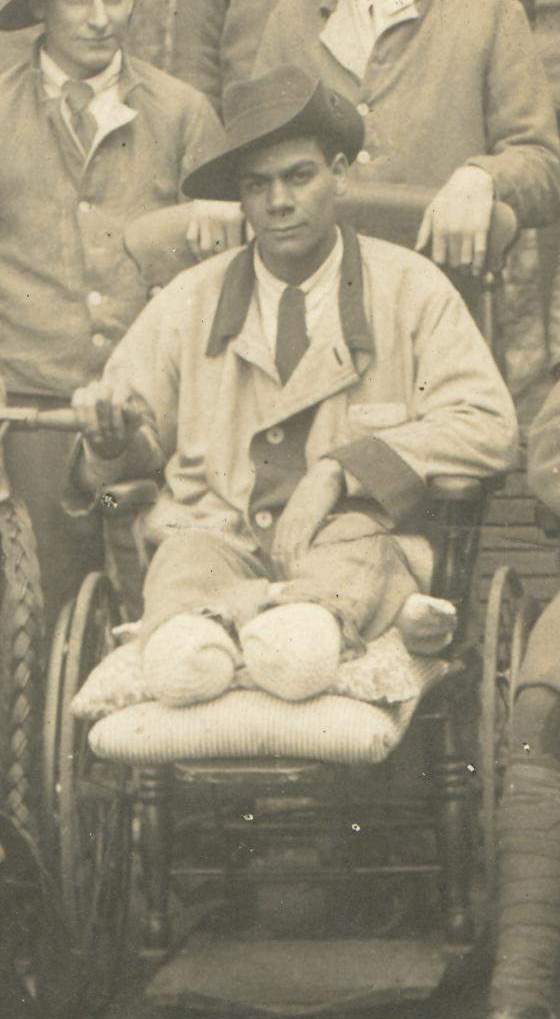
The image is particularly startling because of the condition of one man in the front row. Discoloration of most of his hands may indicate burns but more significant is that he has lost both legs.

blog image for double amputee Aboriginal

From his appearance, there is a possibility this man is of Aboriginal heritage. Attempts to identify him are ongoing but to date have yielded no results. The six members of the AIF who lost both legs so far located are John McLaren  511, Hugh McDonald, 4248, Walter Benjamin Ashcroft 3451, Malcolm Brown 4439,  Joseph Allen Baillie 22, Frederick Trice 2176 and Ivor Murray Wilson 733. (1)  None of these men are the man in the photograph.

The only known member of the group is Leslie John Hackwood of Warwick,  Queensland who wrote the information on the reverse of the photo – ‘Australians in G Ward. Horton War Hospital Epsom England. April 4th 1917. Les J Hackwood.’

HORTON WAR HOSPITAL SURREY 4 APRIL 1917 G WARD

Information about any of the other men in the photograph could possibly prove useful in identifying the  man without legs. Information about servicemen who lost both legs could also be helpful, even if only for elimination purposes. In particular oral family history may hold the key to identification of this AIF member.

Note. The photograph, which was advertised on Ebay in June 2013, was located by Peter Bakker of Hamilton Victoria.  

(1) Alexia Moncrieff, PhD Candidate, School of History and Politics, The University of Adelaide, researching Australian Army Medical Services in WW1.

Philippa Scarlett 24 June 2013


Posted in WW1 | 3 Comments

WILLIAM PUNCH OF GOULBURN: ABORIGINAL ‘MASCOT OF HIS BATTALION’

At 3 pm on 31 August 1917, Private William Joseph Punch, AIF was buried in East Cemetery Boscombe, Bournemouth, in England. He was accorded a full military funeral with the firing party supplied by the New Zealand Engineers, Christchurch. Wreaths were sent by Australian friends and his fellow comrades from ‘C’ Floor, Mont Dore and the Mont Dore Nursing Staff. According to information in his service record he was 37.

Only two days earlier, he dictated his will in Mont Dore Military Hospital, on 29 August, the day he died. By then although able to write with facility he was too weak to do so and signed with a cross, obviously determined to communicate his final wishes.

He signed up as William Joseph Punch but was known in his home town of Goulburn, New South Wales simply as Punch and referred to himself as such. His real name is unknown. Punch is sometimes said to have come from Queensland but was actually born in New South Wales, probably near the Bland north west of Goulburn, where he was found after the murder of his Aboriginal family in retaliation for cattle spearing. He himself gave New  South Wales as his place of birth on his attestation. In fact the story of his Queensland origins was a subterfuge to disguise his early history.

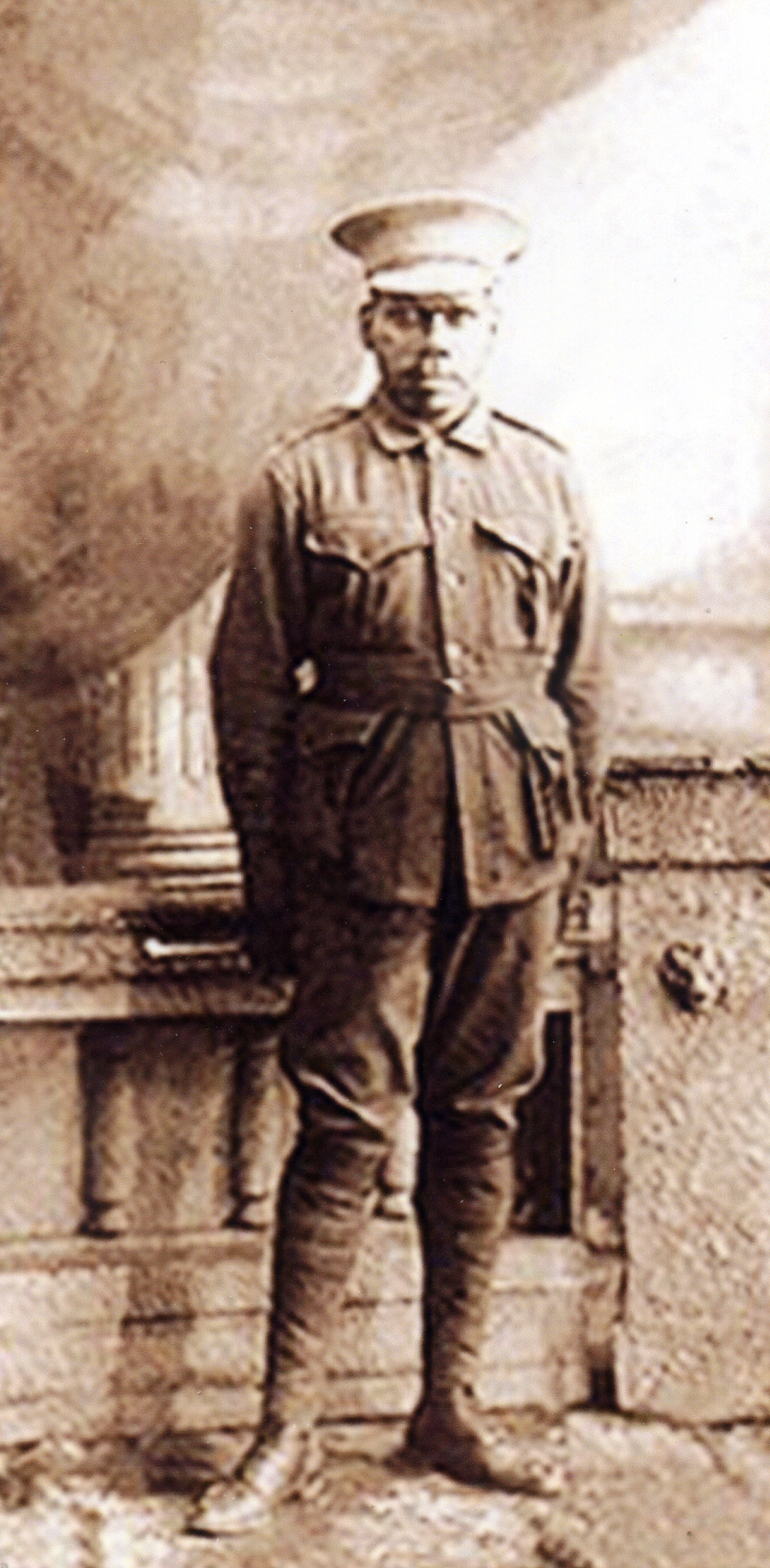
Punch’s story was published in 1992 and 1993 in the Journal of the Goulburn and District Historical Society by Albert Speer whose family lived in the Goulburn area and knew Punch well. Punch had once saved Speer’s father’s life. Speer’s contact with an old resident of Goulburn revealed that Punch’s clan had been murdered by a group of Goulburn area locals seeking land to adjist their cattle. He grew up in the Goulburn district where he worked as a labourer on the surrounding farms and became a well known and well liked member of the community. This may explain the fact that despite the prohibitive military regulations, when he volunteered at Goulburn he was accepted into the AIF – his attestation clearly refers to him as Aboriginal. His identity is underlined by photographs taken of him in uniform before embarkation.
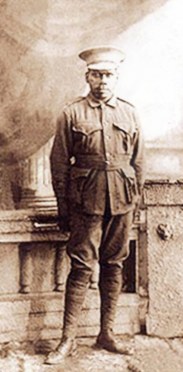
WILLIAM PUNCH portrait courtesy Albert Speer

Portrait of Punch in AIF uniform. Courtesy Albert Speer and Goulburn and District Historical Society.
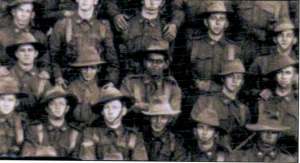
PUNCH IN GOULBURN AIF group February 1916

Punch is centre, middle row in this detail from a group photograph of Goulburn recruits dated 22 February 1916.  Courtesy Albert Speer.

Newspaper reports of Punch in pre-war days confirm he was popular and extroverted. One report, of the 1908 Boxing Day Junction Social at Woodhouselee near Goulburn, shows that at the same time he was clearly demarcated by his Aboriginality.

The music was all that could be desired, and when I mention such first class violin players as Messrs. Will Gallaher and J. Siggs, and “Punch,” ably relieved at intervals by other players whom the writer did not know, it shows that the dancers had nothing to complain of on that score … One of the characters of the evening was a coloured “pusson ” rejoicing in the soubriquet of “Punch.” He was all over the place, and as lively as the proverbial “bag of fleas.” Just as some of the guests were departing “Punch” bounded out of the door, no boots on, took a flying leap on one of the horses behind the rider and saddle, stuck his heels into the horse’s flanks, and gave the company an exhibition of buckjump riding which showed that he had not been among horses all his life for nothing. 

Punch’s companion John Siggs was the member of the Siggs family who rescued him as a baby. Will Gallaher was also a Siggs relative as was Oswald Gallaher named by Punch as next of kin and a joint beneficiary in his will. The other beneficiary was Eliza Jane Lynch or Mrs Michael Lynch of Laggan near Goulburn, where Punch was employed before the war. One of her daughters married into the Siggs family and another into the Gallaher/Gallagher family. Punch’s recognition of these people in his will attests to the nature of his relationship with the Siggs and connected families.

Punch volunteered at Goulburn at the age of 36 and served with the 1st and 53rd Battalions. After a few weeks in Egypt he went to France where he was twice wounded, in September 1916 and April 1917. On 13 May 1917 he was sent back to hospital in England and died four months later of pneumonia. The report of his first injury also tells much about Punch and his situation.

5th October 1916. PUNCH” WOUNDED. Mr. O. Gallagher, of Bourke Street, Goulburn, on Wednesday received a telegram from Base Records stating that Private Wm. J. Punch had been wounded. Private Punch is an aboriginal, and was better known as “Siggs’s Punch,” he having been reared by the late Miss Siggs and the late Mr. John Siggs, of Pejar. Mrs. Gallagher (mother of Mr. O. Gallagher) is a sister of the late Mr. Siggs, and Mr. Gallagher was a great friend of “Punch.” “Punch” was trained in the Goulburn Camp, and was a favourite. He was looked upon as a mascot. He was very adaptable, and was a good rifle shot. He was with the Australian forces in France. 

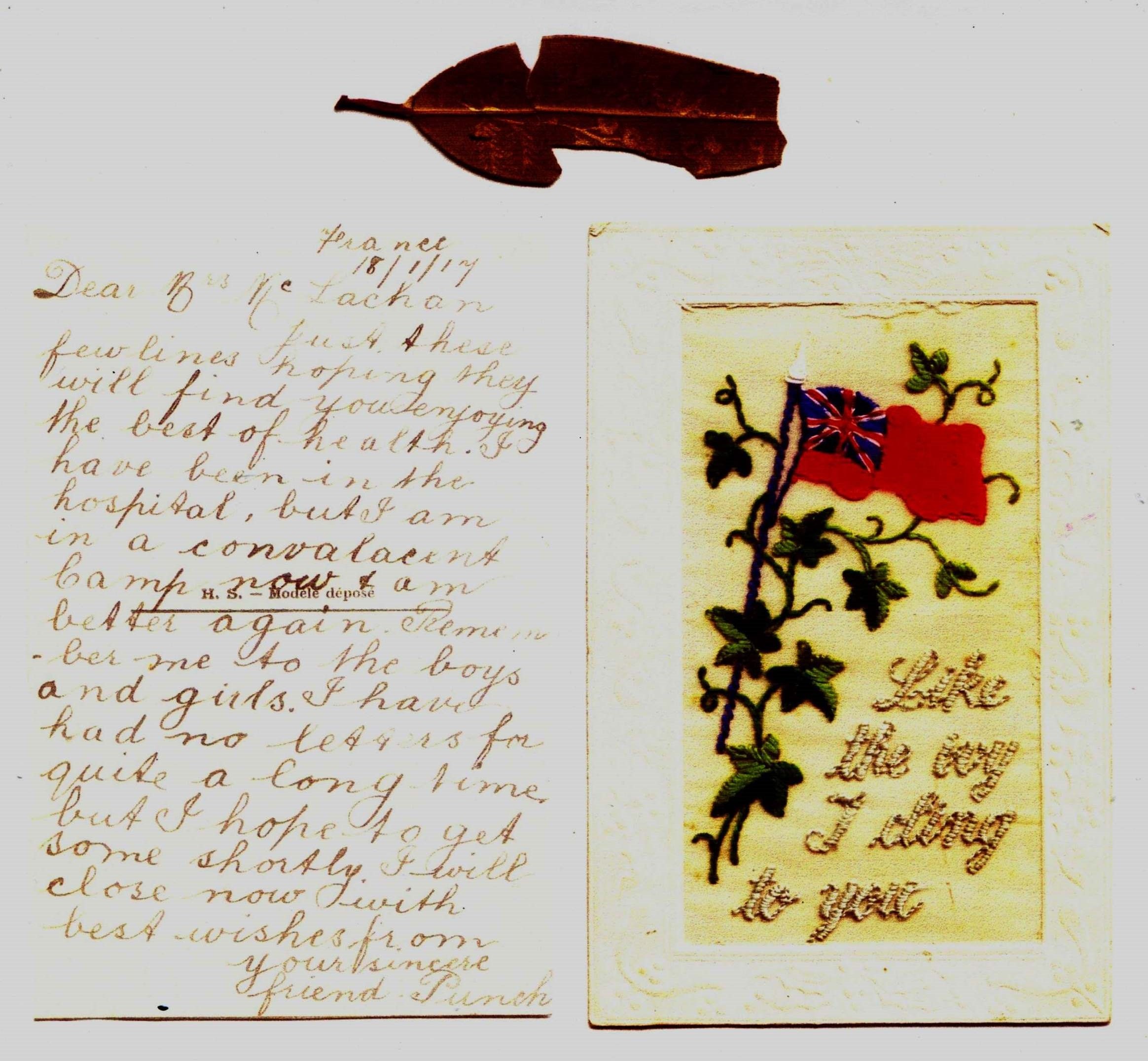
Punch as well as being wounded had severe problems with his feet which resulted in his spending time in hospital in December 1916. A letter to another friend, Mrs Emily McLachlan whose children grew up with Punch, shows he was still out of action in mid January:

France 18 January 1917

Dear Mrs McLachlan

Just these lines hoping they will find you enjoying the best of health. I have been in the hospital but I am in a convalescent camp now & am better again. Remember me to the boys and girls. I have had no letters for quite along time but I hope to get some shortly. I will close now with best wishes from

Your sincere friend Punch

Mrs McLachlan's card from Punch 18. 2. 1917

Copy of a gum leaf and a post card, sent by Punch to Mrs E. McLachlan. Courtesy Albert Speer.

Punch was not the only Aboriginal man to volunteer at Goulburn in late December 1915.  At least one other recruit was also Aboriginal and became like Punch a member of A Company 1st Battalion. This was James Merritt (aka Middlemas) of Queanbeyan who is probably the unnamed Aboriginal man in a photograph of the Goulburn recruits taken on 22 February 1916. However it was Punch who was nominated as a battalion mascot by his fellow Goulburn volunteers, perhaps a reflection of the character he displayed at the Woodhouselee social. Merritt had a very different upbringing with his Aboriginal mother – whereas Punch was deprived of this connection and while popular was also objectified as ‘Sigg’s Punch’ in the white community he lived in.
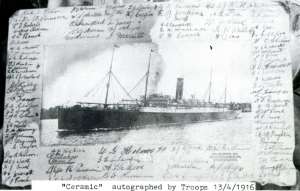
Troopship 'Ceramic' autographed by troops 13 May 1917

Autographed photograph of the troop ship Ceramic, Exchange Studios, Pitt Street Sydney. Punch’s signature is bottom far left. The signature of James Merritt is immediately above the forward mast of the ship. The original was shown to Albert Speer by Mrs Welch of Bungonia. Courtesy Albert Speer.

Punch’s story is a tragic one. He was treated well by the family which took him in and was liked by his community but at the same time, unbeknownst to him, lived amongst the descendants or even the actual people responsible for the deaths of his real family. There is no evidence that he associated with other Aboriginal people in the area – although they may well have been relatives. Rather he lived until the age of 36 as something of an anomaly in his community, respected but different. Like Punch, Douglas Grant, another Aboriginal member of the AIF, was the victim of a massacre and taken in by a white family. Grant achieved some success after the war but in the end his life crumbled around him as he was unable – or society itself was unable – to resolve the issue of an Aboriginal man alienated from his culture trying to exist in a white man’s world. It is likely the future for Punch may have not been so unfortunate but this is unknown. The community acceptance he did have ultimately did him no service as it facilitated his entry into the AIF which in turn led to his premature death.

More information about Punch can be found in

Albert Speer, ‘William Joseph Punch 31.3.1884 – 29.8 1917’, Journal of the Goulburn and District Historical Society, No. 267, October 1992 and No. 271, April 1993.

Australians at War  ‘Aborigine survives Family Massacre but dies in war’.

My thanks to Albert Speer, Monica Croke and Goulburn and District Historical Society

Philippa Scarlett 12 June 2013

Posted in WW1 | 6 Comments

WILLIAM ‘MICK’ KING AND THE POSITION OF ABORIGINES IN THE AIF

Information requested from volunteers for the AIF did not include details of race although this may be mentioned incidentally in service records. In other instances secondary sources can assist in establishing the fact that an individual is Aboriginal and may also provide more about him and about Aboriginal service in general.

William King service number 3422, is one of three men in the AIF named King who are known to be Aboriginal. William Alfred King, service number 3650 and Richard King, service number 579, can be identified as Aboriginal from information in their records linking them to missions in New South Wales and Victoria. William King 3422 was born in Maitland NSW and belonged to both the 56th and 36th Battalion. His service record contains nothing which points to Aboriginality. However Henry Raine, a private in the 56th Battalion, makes this clear in a letter to the RSSILA journal Reveille, 29 July 1931, written in connection with Aboriginal service. In this the he states 

I think Mick King, who enlisted with the ninth, reinforcements of the 56th battalion was also a full-blood. 

Raine refers to King as Mick King but explains that this is a nickname derived from the fact that King was an amateur boxer and there was at the time another well known white boxer of that name. Although Raine either did not know or did not bother to give King’s real given name, his battalion and reinforcement details plus place and death details, show that Mick King was in fact William King 3422. 

Raine’s letter does more than simply identify King as Aboriginal. It focuses on his qualities as an individual and in doing so gives an insight into the position of Aboriginal members of the AIF.

He writes that King was one of the ‘quietest and gamest members of the Battalion’ going on to tell how as an Aboriginal man he was (ironically) racially taunted by a group of West Indian soldiers.

[They] must have thought they had scored a bloodless victory, but they were sadly mistaken, for Mick slowly put out his pipe and then walked over and knocked out four of his tormentors with four punches – each as clean as a whistle.

Raine finishes with the words ‘although he was black he was a White man and a dinkum Aussie.’ In saying this Raine, whose respect for King was undoubted, sees attributing white characteristics to an Aboriginal man as praise of the highest order. This in essence was a deeply racist concept. His letter is a significant one because of the manner of his tribute to King and the fact that his comments are not an isolated example of such thinking. His comments make plain the qualified nature of the acceptance of Aboriginal AIF men by their comrades and show that whatever the achievements of Aboriginal men they were still judged by the fact that they were not white.  It is comments like this by an unquestionably sympathetic party which call into question the idea now prevalent that Aboriginal men achieved equality in the AIF. This is too simplistic and is something which needs to be examined more carefully – not brushed aside by warm generalisations about mateship.

King had been transferred to the 36th Battalion before he was killed in Belgium in October 1917. Raine says he was ‘blown to bits’ shortly after the incident he described. His premature death meant that his service medals could be claimed by his family. However examination of his service record shows that the army was unable to trace his next of kin, (named as his wife Katie* c/o Post Office Guyra NSW). In 1927 his Memorial Plaque and Memorial Scroll and possibly the two medals he was entitled to, were – and still may be – unclaimed.

Further information about the family of William ‘Mick’ King – and the other Indigenous Kings in the AIF could assist with another problem of identification. King is also the surname of an Aboriginal servicemen from an earlier conflict. F. King was a tracker and member of the New South Wales A Company of the 1902 Federal Contingent to the Boer war. This William King 3422 and/or the other Indigenous Kings in the AIF may be connected to F. King affording an opportunity for additional research.

* The name of William King’s next of kin was later changed on one copy of his attestation to Janie. This appears to be a consequence of a temporary but rectified confusion apparent in the record of this William King with William Alfred King.

Note. Peter Stanley explores relationships of non-white peoples and Australians in World War One including reference to Mick King in ‘ “He was black. He was a White man and a dinkum Aussie”  Race and Empire in revisiting the Anzac legend.’ in Santanu Das, Race Empire and First World War Writing, Cambridge University Press,  2011, pp. 225 -226.

Philippa Scarlett 5 June 2013

Posted in WW1 | 1 Comment

JEROME LOCKE: ABORIGINAL SERVICE IN THE COLONIAL AND AUSTRALIAN MILITARY FORCES

On 16 September 1900 Mr. Walker, Member of the Legislative Assembly of New South Wales, gave an impassioned speech to a public meeting at Windsor, calling for the establishment of a Windsor volunteer rifle corps. Citing unrest in Europe and specifically referring to Russia and France he urged that ‘Every district in the colony should be ready to take up arms for the general defence.’ In doing so he was echoing the perception throughout the 19th century of the precariousness of Australia’s position in the wider world. The Windsor Volunteer Rifles was just one of many volunteer units formed in the 19th and early 20th century. The history of volunteer rifles in the Windsor area encompassed the Hawkesbury Volunteer Rifles active in the 1860s, an earlier Windsor Volunteer Rifles /Windsor Corps in the 1870s and 1880s and the Windsor Volunteer Rifle club, active in the 1890s.

Walker went on to exploit the already demonstrated local patriotism of the Hawkesbury area when he declaimed that

as loyal hearts were to be found in their little town of Windsor as in any portion of Her Majesty’s dominions ; and if they did not come forward willingly and enrol themselves as volunteer he considered they would not only be doing injustice and discredit to themselves, but would in a manner be ignoring their British origin.

One man who belonged to the Windsor Volunteer Corps in 1889 [Shut Out from the World p.66] and who may also have belonged to the later unit, the subject of Walker’s address in 1900, was Jerome Locke. He too had the British blood emphasised by Mr Walker (his Darug Aboriginal grandmother Maria was the wife of an English convict, Robert Lock) but he and his extended family were known as Aboriginal and from the inception in 1883 of the New South Wales Aborigines Protection Board  lived the their lives under its shadow.

jerome locke windsor corps 1889

Jerome Locke c1889   Courtesy Darug Tribal Aboriginal Corporation

Jerome Locke was not only a member of the Windsor Corps but was one of the Corps’ more accomplished marksmen. On Saturday 22 June 1889 the Windsor and Richmond Gazette reported that ‘A pleasant afternoon was spent by the Windsor Corps … competing for prizes, kindly contributed by the merchants and others of the town, for the purpose of encouraging the members of the corps in rifle practice.’ Present on this occasion was Private Jerome Locke who distinguished himself by being one of the nineteen prize winners. In joining the Windsor Corps, he became possibly the first Aboriginal man to serve in a colonial military force. But not only that, despite being over age in 1916 he also served in World War One.

On 22 December 1915 Jerome Locke, by now a member of the St Marys Rifle Club,  joined the Rifle Reserve Thousand recruitment march. This group mustered at Government House before proceeding to Victoria Barracks to volunteer for active service in the AIF. The Rifle Thousand was a recruitment movement inspired by Ambrose Carmichael, New South Wales Minister for Public Information, one which aimed to utilise the talent and training in state rifle clubs to augment the AIF. To this effect Carmichael conducted a letter writing campaign to newspapers all over the state and held public meetings promoting the idea of a Rifle Thousand. He emphasised that a state of emergency previously feared had now arrived and that it ‘It will now become more than a struggle between Briton and Hun. We are at present fighting for civilisation; we may have to fight for racial existence.’ This  added irony to the service of Jerome Locke and was in line with the White Australia sentiment which saturated Australia. The recruits enlisted as a result of Carmichael’s recruiting drive went on to dominate the membership of the 36th Battalion AIF. This was raised at Broadmeadow Camp in Newcastle, New South Wales in February 1916.

Jerome Locke’s application to enlist  dated 3 January was annotated ‘Rifle Club Battalion’ and his attestation paper was completed on 6 January 1916 at Liverpool.

Giving his address and place of birth as St Marys New South Wales and his occupation as contractor, he nominated his son Laurence R. Locke and later a brother John of the same address, St Marys, as his next of kin. A widower of 44 years and 5 months, he still had dark hair, his eyes were brown and his complexion dark. The Lock Family In World War One p.2.

He was allocated to A Company Rifle [36th] Battalion at Broadmeadow on 24 February 1916 and left for the United Kingdom in May, serving in France and Belgium before transferring to the 53rd Battalion in early October. However his service did not run smoothly. 

By late 1917 concern for her uncle had prompted Miss H. [Harriet] M. Sims of Camden Haven, Laurieton NSW to write inquiring about his welfare. A reply dated 14 November from the Officer in Charge, AIF Base Records stated

I have to acknowledge receipt of your letter dated 1st instant… if the soldier you refer to is No. 117A Private Jerome Locke 53rdbattalion … I have to advise that he returned to Australia on 12/5/17 and was discharged from the Force in Sydney on 11/6/17 on account of being over age. A communication to the following address may reach him – Mr J Locke St Marys Cumberland NSW. The Lock Family In World War One p.5.

Jerome Locke served seventeen months in the AIF – mainly overseas and was hospitalised in November 1916 with trench foot. Although forced to return to Australia in 1917, he twice attempted to enlist again in 1919, the second time with success. Despite the fact that hostilities had ended when the ceasefire was signed on 11 November 1918, it was not until the signing of the Treaty of Versailles on 28 June 1919 that there was a formal end to the war with Germany. Jerome Locke re-joined the AIF on 11 June and shortly after left for London as a member of the Traffic Control Detachment (Special Service Unit). This had the task of providing guard duties for German deportees from Australia to the United Kingdom.

Jerome’s second attestation in 1919 had some differences in personal details from those he supplied in 1916.

He [again] described himself as a widower but he was showing his age – his hair now described as grey – and this time he gave his place of birth as Blacktown and his date of birth as 23 August 1868. This made him almost 51 when he left Australia for England in early July and was a more realistic statement of age than that on his original application. However he was still understating his actual age by two years.( A birth date of 1866 is given in Kohen, The Darug and Their Neighbours,  p.174). Neither of his attestations refers to his service with the Windsor Corps, Volunteer Infantry although the attestation paper specifically requests details of any previous military service. However omission of this information is consistent with his attempts to disguise his real age. The Lock Family In World War One p.5.

Jerome Locke right with sons Olga left in uniform and Willam

Olga, William and Jerome Locke Courtesy Noel Morley

Jerome Locke’s acceptance and service in the Windsor Corps is an indication of his standing in the Windsor community. His total military service, considering his age and Aboriginality, was unusual if not outstanding. Noteworthy too is that in addition to his own service, at least 20 other members of the Lock and extended family volunteered for World War One. These included two of his sons Leslie John and Olga , the latter serving with him in the 36th and 53rd battalions.

Philippa Scarlett 31 May 2013

Posted in WW1 | 2 Comments

ABORIGINAL TRACKERS: BOER WAR

The exact number and identity of trackers both Aboriginal and non Aboriginal who volunteered for service in the Boer war is still the subject of discussion. However Colin Renshaw, a veteran of research in this area, has drawn my attention to information about two men whose existence and Aboriginality were clearly documented at the time. Both are mentioned twice in the press in the months before the departure of the Federal Contingent on 18 February 1902.

A brief article dated 17 January and headed the THE MELBOURNE ENROLMENT appeared in the Queenslander on 25 January 1902. This notes that

The number of men so far attested for the Federal Contingent is 212. Two black trackers. Davis and F. King, have been taken on the strength .

Although the article infers the men are from Victoria, another more detailed article makes it clear they are from New South Wales. This reads in part

THE FEDERAL CONTINGENT
OVER 200 MEN ENROLLED. 54 ATTESTED YESTERDAY.
TWO BLACK TRACKERS TAKEN :
Good progress was made yesterday in connection with the enrolment of men for the Federal Contingent at the Agricultural Grounds. Major Boam, D. A. A. G., attested 54 men, who had passed all tests, bringing the total number enlisted to date to 212 out of 348 required.
The medical officers – Major Roth, D S O, and Captain Green, D S O – examined 53 candidates, and sent 36 of them on to the acting camp commandant to be tested in riding and shooting The remaining 17 were rejected.
Two black trackers E Davis and F. King were taken on the strength.

The article goes on to give details of the companies the men were assigned to under the heading

POSTED TO COMPANIES.
The following 54 men, having passed all tests, were yesterday attested and regimental numbers allotted as under.

F King with Regimental Number 70 and E Davis with Number 71 were listed under A Company.

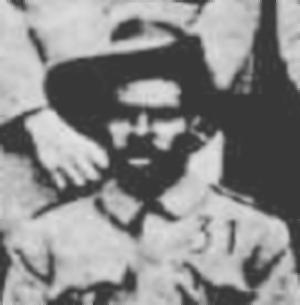
The contingent sailed on 18 February 1902 three days after its members’ photographs were printed in the Town and Country Journal under the heading ‘The First Federal Contingent, The New South Wales and Queensland Companies.’ The photograph of the men in the New South Wales A Company includes ‘F King Black Tracker’. A detail from the group showing King provided by Colin Renshaw appears below. The number 31 was superimposed for identification purposes.

F King Black Tracker

Efforts by Colin Renshaw and others to find out more about these men have to date been unsuccessful. There are people named King and Davis in the Index to the minutes of the New South Wales Aborigines Protection Board but the minutes do not contain the names of all Aboriginal people in New South Wales and in any case not all the minutes have survived. However these names could be a starting point. They show that Aboriginal Kings were living in north and north west New South Wales and Aboriginal Davis families on the New South Wales south and north coast, including the Batemans Bay and Kempsey areas. Edward or Ned Davis is mentioned in other records relating to Yass, Darlington Point and Brungle/Gundagai. His name is consistent with ‘E Davis’ as is his age group – he was 32 in 1902 (based on his second marriage certificate) but there is nothing in the records to suggest he was ever a tracker, enrolled in the Federal Contingent or in the Sydney area at any time.

More research and perhaps family input could shed some light on both these men. It may also ascertain what happened to Davis after he enrolled. He is not amongst those listed in the 1902 photograph of A Company, Federal Contingent. In addition Colin Renshaw has pointed out another subject for investigation. This is that King’s name does not appear on the awards roll for his unit. But while there are still questions to be answered about these two men, the fact their names and regimental numbers are known and their acceptance into the Federal contingent is documented is a big step forward.

More discussion of this issue can be found in the Desert Column Forum  and the Victorian Wars Forum

Philippa Scarlett 2 May 2013

Posted in BOER WAR | 5 Comments

ABORIGINES, WAR AND ANZAC 1788- 2013

During the course of the First World War Aboriginal soldiers were members of all but two of the 61 infantry battalions of the AIF and of all light horse regiments. They also served in artillery brigades, machine gun companies, pioneer, motor transport and cyclist battalions, remounts, camel corps, tunnelling companies, veterinary sections, railway units, supply and transport units, medical corps and hospital units. (Aboriginal and Torres Strait Islander Volunteers for the AIF Page 3.) Despite this their presence went unnoticed by the chroniclers of the history of the AIF. Aboriginal individuals displayed the same qualities as other AIF members, including those which were used to craft the Anzac legend. Belatedly the retrospective movement to link Aboriginal soldiers into the Anzac tradition recognises this.

There are two more particularly relevant facts about the service of Aboriginal men in the AIF. The first is that they served despite the provisions of the Defence Act of their own country prohibiting men ‘not of substantial European origin’ from doing so. Second and equally relevant was the fact that this was not the first time Aboriginal people had taken up arms in defence of their land. Although Aboriginal service in Australia’s overseas wars, once ignored is now gaining recognition, in 2013 the war which followed invasion is still not officially commemorated by the Australian Government and people.

Like Gallipoli the conflict in the years after 1788 resulted in defeat, at least for some Australians. It too could be called an heroic one, but as a war on Australian soil not fought in a foreign land it does not fit into the template we have come to expect of defeats of this kind: it is too close to home, the victors and vanquished live side by side and the victors – traditionally so often the interpreters of history – are in the majority.

I wrote in 2o12 that the exclusion of Aboriginal people from Anzac was

rendered more poignant and given irony by the fact that by 1914 Aborigines in Australia were already veterans of a continuing war, one which started in 1788 and which some would argue is still unfinished. Moreover while Australia found and still finds positives in the defeat of Gallipoli, it is hard for Aboriginal people to see the experience of the forcible alienation of their land and destruction of so much of their language, culture and social organisation in a similar creative way. (Aboriginal and Torres Strait Islander Volunteers for the AIF Page 81.)

The war which followed invasion may not have been a Gallipoli, but the consequences of this defeat for the losers are all around us – not as with Gallipoli to be seen in the mythologising and rhetoric which continues to build on this campaign – but in the continuing impact of invasion on the lives of Aboriginal people.

With the steadily growing recognition of Aboriginal war service in Australia’s overseas wars, the next step for the benefit of Aboriginal and non Aboriginal Australians alike, is to acknowledge the first war on Australian soil. Dean Ashenden is representative of a number of commentators seeking recognition by the Australian War Memorial of this war. (‘Best we Forget’, Canberra Times 3 April, 2012). He says

The historians’ case is straightforward. It has now been established beyond  doubt that armed conflict between black and white occurred across the continent  over a long period of time, and was routinely referred to by participants and  observers as a ”war”; those conflicts were similar to other irregular warfare  already commemorated by the memorial; so, the ”frontier wars” should be  commemorated also.

Not only would this be a significant act of reconciliation, it would strengthen Australia’s understanding of its history – both military and social – and make Anzac Day a day at last fully inclusive of all Australians.

If as some would have it, Australia came to birth as a nation at Gallipoli, can Australia come to national maturity before the centenary of Gallipoli by recognising ALL of the wars which have shaped its history?

Philippa Scarlett 25  April 2013

Posted in WW1 | 1 Comment

WILLIAM CASTLES: ABORIGINAL DARUG SOLDIER OF WW1

Aboriginal WW1 soldier William Castles came from Rooty Hill in the Parramatta district of New South Wales and was a great great grandson of Yarramundi, chief of the Boorooberongal clan of the Darug. His mother was Ada Locke and his father Thomas Castles.

He first volunteered for the AIF in December 1914 but was discharged a month later when he refused inoculation. He must have overcome his fears by May 1916 when he volunteered a second time.  The existence of his two attestations shows an interesting difference in physical description. While his complexion is initially given the general and not uncommon description ‘dark’ this becomes complexion ‘brown’ in his second attestation. Despite this more specific reference to his Aboriginality he was accepted  into the AIF.

William Castles’ service number 2507 was close to that of Percy Freeman 2509. Percy was the husband of William’s cousin Mary Jane Stubbings, a daughter of Mary Jane Castles and George Henry Stubbings. Like William, Mary Jane was a great grandchild of Maria Lock. Both men were carters who enlisted on the same day at Liverpool and became part of the 5th Reinforcements of the 54th Battalion. They served together in France in 1916 and 1917 from Fromelles to the Hindenberg line and became casualties within days of each other. Freeman was killed on 18 May and William Castles was wounded in both legs, his left hand and his arm three days earlier. After spending three months in hospital, suffering also from a kidney condition, he was discharged on 27 September but died at sea on 23 October 1917. He was 21. The distraught reaction of his aunt and next of kin is recorded in a post of 6 February 2013. His death triggered a series of letters from his family seeking custody of his medals which in the end were given to his brother Edward George Castles.

William Castles is mentioned five times in the Minutes of the New South Wales Aborigines Protection Board, between 1911 and 1913. The minutes show him at Bomaderry, Bolong, RosebyPark and indentured at Emu Plains – all locations on or near the NSW South coast.

Photographs of both William Castles and Percy Freeman appear in Parramatta and District Soldiers Who Fought in the Great War 1914 1919. The publisher of this book was the newspaper the Cumberland Argus – and the photographs were probably taken from its pages. They can also be seen on the WW1 Pictorial Honour Roll of New South Wales and the Australian War Memorial’s Roll of Honour.

William Castles    P Freeman

William Castles (Left) and his friend Percy Freeman

William Castles’ motivation to enlist is unknown but the proximity of his service number to that of Freeman, their service in the same unit and their common pre-war occupation and relationship suggests that like other young men – mates – he and Freeman made the decision to join up together. The difference between the two was Castles’ Aboriginality and the power over his life of the Aborigines Protection Board – shown by his entries in Protection Board minutes. But if unequal as Australians both men achieved equality in the AIF in the price they paid for their decision to enlist.

Note.  The ebook of Parramatta and District Soldiers Who Fought in the Great War 1914 1919  can downloaded but it is necessary to do this carefully ignoring the first invitation to download appearing  at the top of the page and clicking on the title to the right of the pdf symbol.

Philippa Scarlett 20 April 2013

Posted in WW1 | Leave a comment

MORE ON GEORGE CAMPBELL HUNT DCM

Michael Riley, great grandson of George Campbell Hunt, has provided more information about his great grand father who was one those members of the AIF who did not fit the profile of ‘White Australians fighting for a White Australia’.

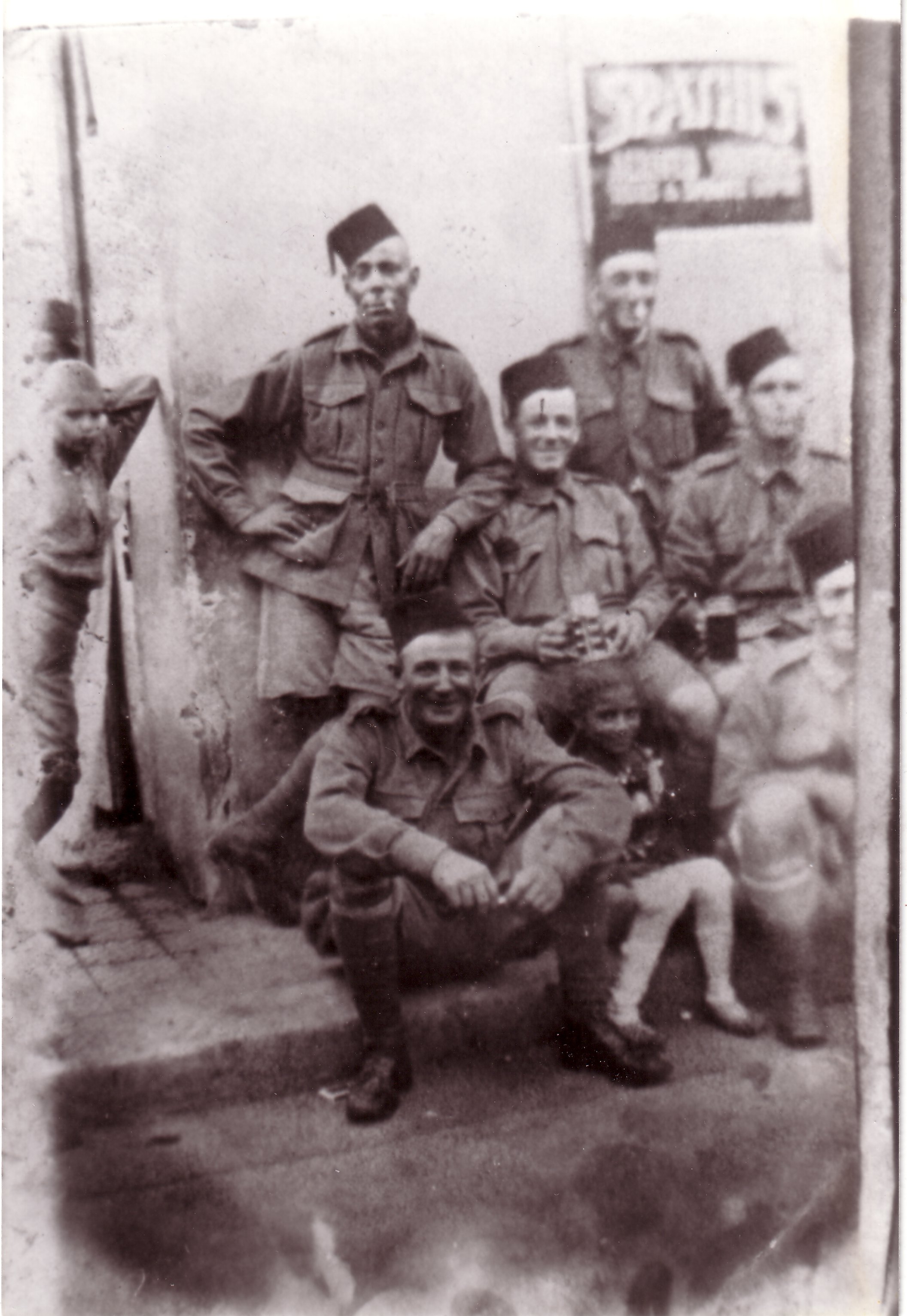
The records located by Michael and others show his father also George Hunt was from Antigua in the West Indies and had arrived in New South Wales by 1877.  Available photographs of George Campbell Hunt (decorated in 1917, the year before he was killed in action at Hamel), show him in a variety of lights – the debonair, in the photograph on the Australian War Memorial Roll of Honour– the stern and war hardened serviceman in a 21st Battalion group portrait taken in 1918 at Picardie and the relaxed soldier amongst mates in an informal photograph of George Hunt and friends provided by Michael. In this he and his comrades wear fezes. These and the children in the photograph suggest the photo was taken in Alexandria before the 21st Battalion proceeded to Gallipoli in August 1915. (Links to the former two photographs are in the 8 March posting WHAT WOULD CHARLES BEAN HAVE SAID ABOUT GEORGE CAMPELL HUNT AIF)

George C Hunt group with Fez Alexandria query courtesy M Riley

George Hunt is in the back row, left, in this photograph probably taken 1915. Courtesy Michael Riley

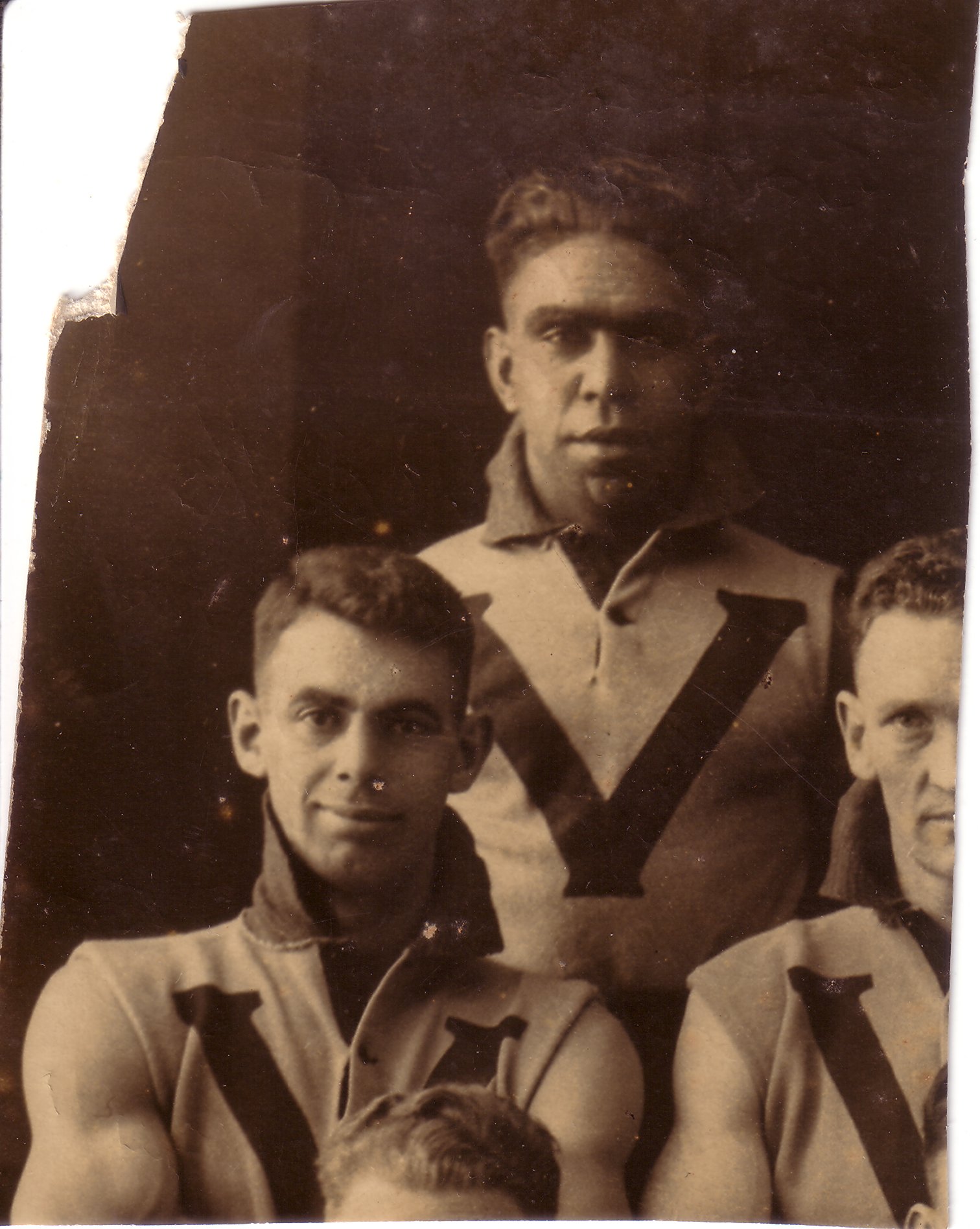
George Campbell Hunt left a young family when he died in 1918. One of these was Michael’s grandfather, also George Hunt. Like Doug Nicholls (originally from Cummeragunja mission NSW) George Campbell Hunt’s son played football in Victoria. A portion of a team photo in Michael’s possession shows both men wearing Victorian Football Association (VFA ) jumpers

Doug Nicholls and George Hunt courtesy Michael Riley

Doug Nicholls top and George Hunt (son of George Campbell Hunt) below left. Courtesy Michael Riley

Of this photo Michael Riley said

The only match I can find they every played in together was a VFA v NSW Game in Sydney in 1931. The photo was taken sometime around then. Either in Sydney or Melbourne. The VFA were usually not allowed to play interstate games due them not being members of the Australian National Football Council. And the jumpers are consistent with the VFA.

This is not a complete photo but is a section cut out specifically to show Hunt and Nicholls. Although normally playing for different teams, Brighton and Northcote respectively – both were from Northcote which could explain the connection and the friendship which the cut out photograph indicates.

Richard  Broome says

Doug tried out unsuccessfully for Carlton in 1927. He signed with the Northcote Victorian Football Association team, despite his nervousness about his Aboriginality, and was given a job with Northcote City Council. 

Broome’s comments suggests that the colour of their skin could also have forged a bond between the two men.

Philippa Scarlett 19 April 2013

Posted in Other non white Australians and the AIF, WW1 | Leave a comment

BLACK RATS: ABORIGINAL SOLDIERS AT THE SIEGE OF TOBRUK

The Black Rat

He lived in a tin hut with a hard dirt floor.
He had bags sewn together that was his door.
He was a Rat of Tobruk until forty five,
He was one of the few that came back alive.

Battered and scarred he fought for this land,
And on his return they all shook his hand.
The price of fighting for the freedom of man
Did not make any difference to this Blackman.

He returned to the outback, no mates did he find.
If he had a beer he was jailed and then fined.
He sold all his medals he once proudly wore:
They were of no use to him any more.

Confused and alone he wandered around,
Looking for work though none could be found.
The Anzac marches he badly neglected,
Would show to his comrades how he was rejected.

He fought for this land so he could be free.
Yet he could not vote after his desert melee.
And those years in the desert they really took their toll,
He went there quite young and he came home so old.

This once tall man came from a proud Black tribe,
Died all alone – no one at his side.

Reproduced courtesy of Bruce Clayton- Brown

The service of Cecil Clayton in World War Two was the inspiration for this poem by his daughter Iris Clayton (1945 – 2009). The poem was first published in 1988 in Inside Black Australia edited by Kevin Gilbert. Cecil Clayton and another Wiradjuri man, Tommy Lyons were both members of the 2/13th Battalion, 9th Division AIF.

Tobruk is a North African town on the Libyan coast originally captured by the Australian 6th Division in January 1941. In April the 9th Division, which had arrived in Libya in February, were encircled and held under siege in Tobruk by a German–Italian army commanded by General Erwin Rommel. The siege lasted eight months and involved 14000 Australian soldiers including the men of the 2/13th Battalion, together with British and Indian troops.

For eight long months, surrounded by German and Italian forces, the men of the Tobruk garrison, mostly Australians, withstood tank attacks, artillery barrages, and daily bombings. They endured the desert’s searing heat, the bitterly cold nights, and hellish dust storms. They lived in dug-outs, caves, and crevasses.
AWM Exhibition notes 2011: Rats of Tobruk 1941

While others from the garrison were relieved, Cecil Clayton’s unit remained till the last.

William Joyce, the Nazi broadcaster, known as Lord Haw Haw coined the term ‘rats’ for the defenders of Tobruk – but contrary to his intention this slur became a badge of honour for those involved – and posterity. The siege of Tobruk is one of the best known events in Australia’s military history. Less known is the presence there of Aboriginal servicemen. Iris’ poem, with strong irony, not only draws attention to this but speaks for the many Aboriginal servicemen in all conflicts whose service until relatively recently remained unrecognised.

NOTE Tommy Lyons’ father also Thomas, served in France with the 54th Battalion in World War One. He was twice wounded in action in 1917 and 1918.

Philippa Scarlett 18 April 2013

As a tribute to Cecil Clayton and his daughter and to other Indigenous Rats, in December 2013 John Tognolini has recorded Iris’ poem, set to his own music . http://www.youtube.com/watch?v=xUOL_Yu1uZ8&feature=youtu.be

Posted in WW2 | 27 Comments

MORE ON WILLIAM STUBBINGS INDIGENOUS BOER WAR VETERAN

Kym Stubbings, William Stubbings’ great grandchild (see post 28 March) has told me of yet another object belonging to William Stubbings.

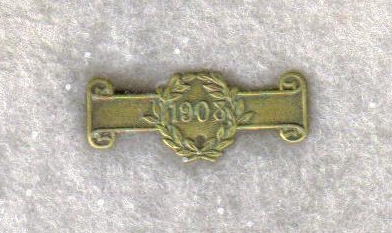
This is a badge (pictured below) whose central feature is a date. The badge consists of an elongated scroll with the date 1908 in its centre. This is enclosed in a wreath. Kym suggests a hole at the base of the wreath could have been used to attach something – perhaps a ribbon. The badge is 35mm in length  and the wreath measures 15mm in diameter and is 10mm in height.

The origin and meaning of the badge is so far unknown but may have something to do with William Stubbings’ Boer war service. The date and the wreath suggest the badge is commemorative.

WILLIAM STUBBINGS 1908 Badge

More information about this badge would add to knowledge about William Stubbings and possibly his war service.

Philippa Scarlett 15 April 2013

Posted in BOER WAR | 8 Comments